Pasteurization
noun
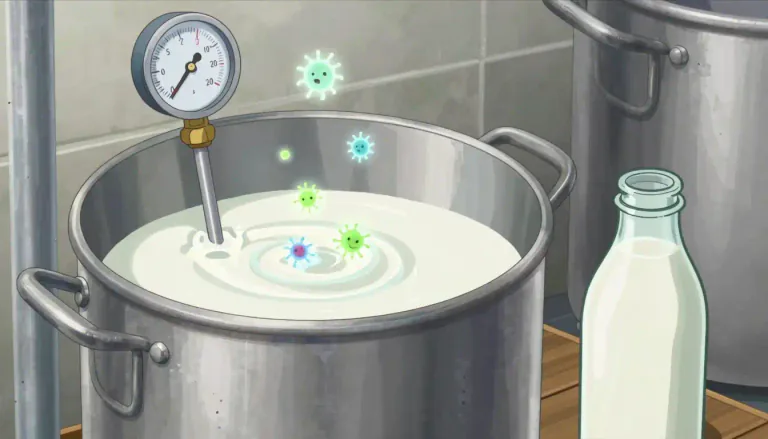
The process of heating a food or drink, usually liquid, to a specific temperature for a specific period of time to kill harmful bacteria, viruses, fungi, and other pathogens to make it safe to consume.
Milk is often sold in supermarkets after pasteurization to ensure it's safe for consumption.
Often appears as...
- milk pasteurization
- juice pasteurization
Usage tips
Technical
noun
The process of heating a food or drink, usually liquid, to a specific temperature for a specific period of time to kill harmful bacteria, viruses, fungi, and other pathogens to make it safe to consume.
Milk is often sold in supermarkets after pasteurization to ensure it's safe for consumption.
Often appears as...
- milk pasteurization
- juice pasteurization
Usage tips
Technical
Definition 1 of 1
 Pro Tip 1/3
Health Safety
Pasteurization is primarily about making food safe by destroying harmful organisms.

Pasteurization ensures that the cheese is free from harmful bacteria.
Pro Tip 2/3Temperature Critical
The exact temperature and time used in pasteurization are crucial for its effectiveness.

The pasteurization of this yogurt involved heating it to 85°C for 30 seconds.
Pro Tip 3/3Not Sterilization
Unlike sterilization, pasteurization doesn't kill all microbes, just reduces them to safe levels.

While pasteurization kills most bacteria in milk, it's not designed to sterilize the milk completely.
Pro Tip 1/3Health Safety
Pasteurization is primarily about making food safe by destroying harmful organisms.
Pasteurization ensures that the cheese is free from harmful bacteria.
Pro Tip 2/3Temperature Critical
The exact temperature and time used in pasteurization are crucial for its effectiveness.
The pasteurization of this yogurt involved heating it to 85°C for 30 seconds.
Pro Tip 3/3Not Sterilization
Unlike sterilization, pasteurization doesn't kill all microbes, just reduces them to safe levels.
While pasteurization kills most bacteria in milk, it's not designed to sterilize the milk completely.
Pro Tip 1/3Health Safety
Pasteurization is primarily about making food safe by destroying harmful organisms.
Pasteurization ensures that the cheese is free from harmful bacteria.
Pro Tip 2/3Temperature Critical
The exact temperature and time used in pasteurization are crucial for its effectiveness.
The pasteurization of this yogurt involved heating it to 85°C for 30 seconds.
Pro Tip 3/3Not Sterilization
Unlike sterilization, pasteurization doesn't kill all microbes, just reduces them to safe levels.
While pasteurization kills most bacteria in milk, it's not designed to sterilize the milk completely.
Never forget "Pasteurization"
Humans forget easily. That's why you should download WordUp: Smart reminders, word games, AI practice, and much more!




Video examples
Tristram Stuart: The...
okay? We start out with nine. That's what's in fields around the world every single year. The first biscuit we're going to lose before we even leave the farm. That's a problem primarily associated with developing work agriculture, whether it's a lack of infrastructure, refrigeration, pasteurization,
Video examples
The science of milk -...
or ultra pasteurization, blasts the milk with considerably higher temperatures over just a few seconds. UHT milk boasts a much longer shelf life, up to twelve months unrefrigerated, compared to pasteurized milk's two weeks in the fridge.
Video examples
How Solving this Medical...
to see vaccines introduced for anthrax for cholera and for typhoid one of the most important public health innovations was the introduction of what was called pasteurization you repeat on a substance
Video examples
Tristram Stuart: The...
okay? We start out with nine. That's what's in fields around the world every single year. The first biscuit we're going to lose before we even leave the farm. That's a problem primarily associated with developing work agriculture, whether it's a lack of infrastructure, refrigeration, pasteurization,
Video examples
The science of milk -...
or ultra pasteurization, blasts the milk with considerably higher temperatures over just a few seconds. UHT milk boasts a much longer shelf life, up to twelve months unrefrigerated, compared to pasteurized milk's two weeks in the fridge.
Video examples
How Solving this Medical...
to see vaccines introduced for anthrax for cholera and for typhoid one of the most important public health innovations was the introduction of what was called pasteurization you repeat on a substance
Example 1 of 3

WordUp Chrome Extension
As you browse the web instantly look up words you don’t know.
Get Chrome Extension