Numerator
noun
It is the number above the line in a fraction that is divided by the bottom number.
In the fraction 3/4, 3 is the numerator which is divided by 4.

Often appears as...
- fraction numerator
- numerator and denominator
Usage tips
Academic
noun
In an equation or in statistics, it is the part of a fraction that is divided by the bottom part.
In a ratio of odds against, the numerator represents the number of times the event will not occur.

Often appears as...
- ratio numerator
- calculation numerator
Usage tips
Academic
noun
It is the number above the line in a fraction that is divided by the bottom number.
In the fraction 3/4, 3 is the numerator which is divided by 4.
Often appears as...
- fraction numerator
- numerator and denominator
Usage tips
Academic
noun
In an equation or in statistics, it is the part of a fraction that is divided by the bottom part.
In a ratio of odds against, the numerator represents the number of times the event will not occur.
Often appears as...
- ratio numerator
- calculation numerator
Usage tips
Academic
Definition 1 of 2
 Pro Tip 1/3
Upper Fraction Part
The numerator is always the top number in a simple fraction, indicating portions of a whole.

If you eat 2 out of 5 slices of pizza, 2 is your numerator.
Pro Tip 2/3Not Always Smaller
Sometimes the numerator can be larger than the denominator, indicating more than a whole.
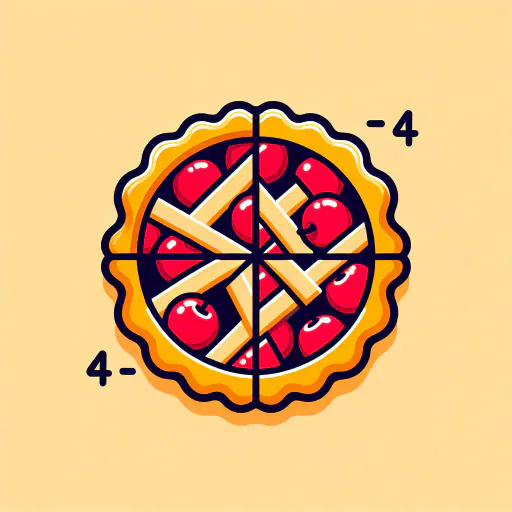
In the fraction 5/4, the numerator shows you have more than one whole.
Pro Tip 3/3Comparison Clarifier
Using the numerator, you can compare how large fractions are without calculating their decimals.

Comparing numerators 3/8 vs. 4/8 shows the second fraction is larger.
Pro Tip 1/3Upper Fraction Part
The numerator is always the top number in a simple fraction, indicating portions of a whole.
If you eat 2 out of 5 slices of pizza, 2 is your numerator.
Pro Tip 2/3Not Always Smaller
Sometimes the numerator can be larger than the denominator, indicating more than a whole.
In the fraction 5/4, the numerator shows you have more than one whole.
Pro Tip 3/3Comparison Clarifier
Using the numerator, you can compare how large fractions are without calculating their decimals.
Comparing numerators 3/8 vs. 4/8 shows the second fraction is larger.
Pro Tip 1/3Upper Fraction Part
The numerator is always the top number in a simple fraction, indicating portions of a whole.
If you eat 2 out of 5 slices of pizza, 2 is your numerator.
Pro Tip 2/3Not Always Smaller
Sometimes the numerator can be larger than the denominator, indicating more than a whole.
In the fraction 5/4, the numerator shows you have more than one whole.
Pro Tip 3/3Comparison Clarifier
Using the numerator, you can compare how large fractions are without calculating their decimals.
Comparing numerators 3/8 vs. 4/8 shows the second fraction is larger.
Never forget "Numerator"
Humans forget easily. That's why you should download WordUp: Smart reminders, word games, AI practice, and much more!




Video examples
These Huge Rats Can...
you SOS every year these rods looks similar to the rods we know the difference that these are white drugs they not see the rods that are used to be in our houses so they are bigger than the numerator that we know there are faster than a human why are they faster
Video examples
The business logic of...
affluence and technology I wanted interface to rewrite that equation so that it read I equal P times a divided by T now the mathematically model will see immediately that T of the numerator increases impact a bad thing but T in
Video examples
Ray Anderson: The...
from the numerator -- call it T1 -- where it increases impact, to the denominator -- call it T2 -- where it reduces impact? I thought about the characteristics of first industrial revolution,
Video examples
These Huge Rats Can...
you SOS every year these rods looks similar to the rods we know the difference that these are white drugs they not see the rods that are used to be in our houses so they are bigger than the numerator that we know there are faster than a human why are they faster
Video examples
The business logic of...
affluence and technology I wanted interface to rewrite that equation so that it read I equal P times a divided by T now the mathematically model will see immediately that T of the numerator increases impact a bad thing but T in
Video examples
Ray Anderson: The...
from the numerator -- call it T1 -- where it increases impact, to the denominator -- call it T2 -- where it reduces impact? I thought about the characteristics of first industrial revolution,
Example 1 of 3

WordUp Chrome Extension
As you browse the web instantly look up words you don’t know.
Get Chrome Extension