Neovascularization
noun
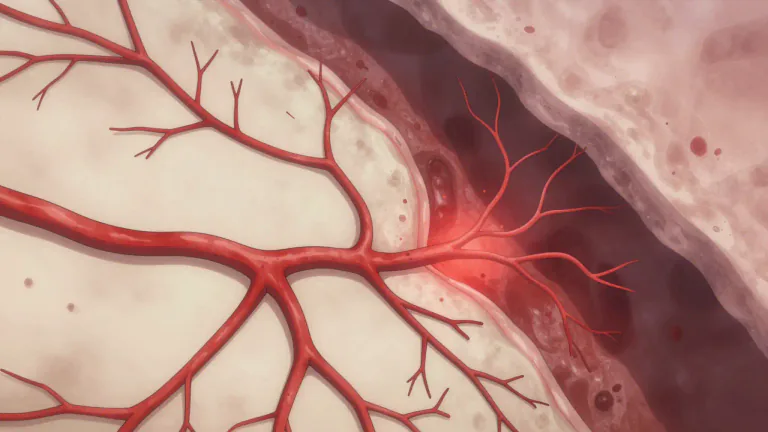
The formation of new blood vessels from pre-existing vessels, often in response to tissue hypoxia or injury.
Neovascularization can lead to complications in diseases like diabetes.
Usage tips
Formal
diabetic neovascularization,tumor neovascularization,retinal neovascularization
noun
The formation of new blood vessels from pre-existing vessels, often in response to tissue hypoxia or injury.
Neovascularization can lead to complications in diseases like diabetes.
Usage tips
Formal
diabetic neovascularization,tumor neovascularization,retinal neovascularization
Definition 1 of 1
 Pro Tip 1/3
Medical Context
Neovascularization is frequently discussed in the context of medical research or treatment options.
The study of neovascularization is crucial for developing therapies for blinding diseases.
Pro Tip 2/3Pathological Implications
It's important to differentiate between physiological and pathological neovascularization.
Not all neovascularization is harmful; some is part of normal healing processes.
Pro Tip 3/3Research Relevance
Understanding neovascularization could improve treatments for cancer and chronic diseases.
Currently, many therapies are targeting the mechanisms behind neovascularization to inhibit tumor growth.
Pro Tip 1/3Medical Context
Neovascularization is frequently discussed in the context of medical research or treatment options.
The study of neovascularization is crucial for developing therapies for blinding diseases.
Pro Tip 2/3Pathological Implications
It's important to differentiate between physiological and pathological neovascularization.
Not all neovascularization is harmful; some is part of normal healing processes.
Pro Tip 3/3Research Relevance
Understanding neovascularization could improve treatments for cancer and chronic diseases.
Currently, many therapies are targeting the mechanisms behind neovascularization to inhibit tumor growth.
Pro Tip 1/3Medical Context
Neovascularization is frequently discussed in the context of medical research or treatment options.
The study of neovascularization is crucial for developing therapies for blinding diseases.
Pro Tip 2/3Pathological Implications
It's important to differentiate between physiological and pathological neovascularization.
Not all neovascularization is harmful; some is part of normal healing processes.
Pro Tip 3/3Research Relevance
Understanding neovascularization could improve treatments for cancer and chronic diseases.
Currently, many therapies are targeting the mechanisms behind neovascularization to inhibit tumor growth.
Never forget "Neovascularization"
Humans forget easily. That's why you should download WordUp: Smart reminders, word games, AI practice, and much more!





WordUp Chrome Extension
As you browse the web instantly look up words you don’t know.
Get Chrome Extension