Eukaryotic
Adjective
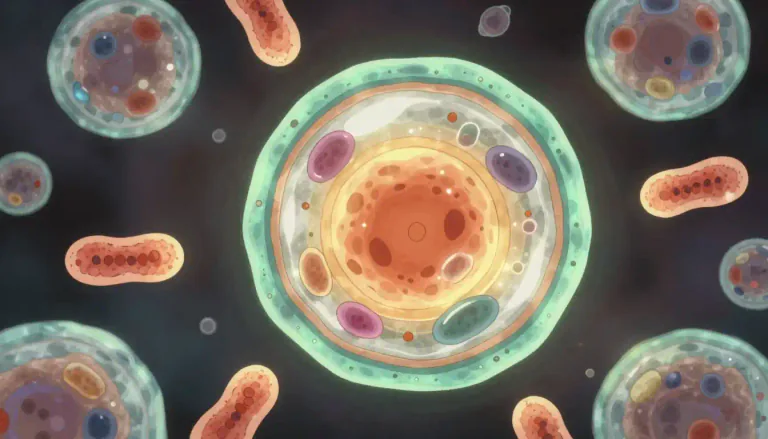
Relating to organisms whose cells contain a nucleus and other organelles enclosed within membranes.
Humans are eukaryotic organisms, which means our cells have a nucleus.
Usage tips
Formal
eukaryotic cell,eukaryotic organisms,eukaryotic DNA
Adjective
Relating to organisms whose cells contain a nucleus and other organelles enclosed within membranes.
Humans are eukaryotic organisms, which means our cells have a nucleus.
Usage tips
Formal
eukaryotic cell,eukaryotic organisms,eukaryotic DNA
Definition 1 of 1
 Pro Tip 1/3
Context
Eukaryotic organisms are often studied in biology to understand their complexity compared to prokaryotes.
Many forms of life, such as plants and animals, are classified as eukaryotic due to their cellular structure.
Pro Tip 2/3Formality
The term is often used in academic or scientific discussions; it may not be commonly understood in casual conversations.
Use it in contexts where biology or life sciences are relevant, to facilitate understanding among peers.
Pro Tip 3/3Nuances
Eukaryotic organisms display higher levels of cellular organization than prokaryotic ones, reflecting their evolutionary advancements.
When discussing evolutionary biology, highlight the significance of eukaryotic cells in the tree of life.
Pro Tip 1/3Context
Eukaryotic organisms are often studied in biology to understand their complexity compared to prokaryotes.
Many forms of life, such as plants and animals, are classified as eukaryotic due to their cellular structure.
Pro Tip 2/3Formality
The term is often used in academic or scientific discussions; it may not be commonly understood in casual conversations.
Use it in contexts where biology or life sciences are relevant, to facilitate understanding among peers.
Pro Tip 3/3Nuances
Eukaryotic organisms display higher levels of cellular organization than prokaryotic ones, reflecting their evolutionary advancements.
When discussing evolutionary biology, highlight the significance of eukaryotic cells in the tree of life.
Pro Tip 1/3Context
Eukaryotic organisms are often studied in biology to understand their complexity compared to prokaryotes.
Many forms of life, such as plants and animals, are classified as eukaryotic due to their cellular structure.
Pro Tip 2/3Formality
The term is often used in academic or scientific discussions; it may not be commonly understood in casual conversations.
Use it in contexts where biology or life sciences are relevant, to facilitate understanding among peers.
Pro Tip 3/3Nuances
Eukaryotic organisms display higher levels of cellular organization than prokaryotic ones, reflecting their evolutionary advancements.
When discussing evolutionary biology, highlight the significance of eukaryotic cells in the tree of life.
Never forget "Eukaryotic"
Humans forget easily. That's why you should download WordUp: Smart reminders, word games, AI practice, and much more!





WordUp Chrome Extension
As you browse the web instantly look up words you don’t know.
Get Chrome Extension