Eukaryote
noun
An organism whose cells contain a true nucleus and membrane-bound organelles.
Humans are eukaryotes because our cells have a nucleus.
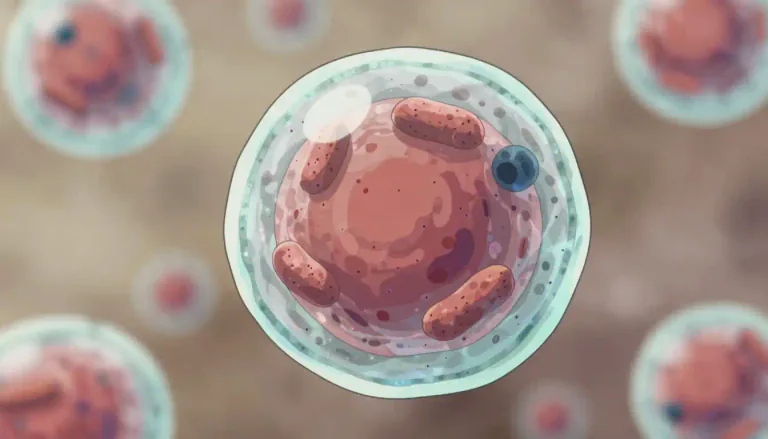
Often appears as...
- eukaryotic organism
- eukaryotic cell
Usage tips
Neutral
single-celled eukaryote, multicellular eukaryote, eukaryotic cells
noun
Any organism whose cells are characterized by the presence of a nucleus.
Fungi are another group of eukaryotes that play vital ecological roles.

Often appears as...
- eukaryotic life forms
- eukaryotic organisms
Usage tips
Neutral
unicellular eukaryotes,multicellular eukaryotes
noun
An organism whose cells contain a true nucleus and membrane-bound organelles.
Humans are eukaryotes because our cells have a nucleus.
Often appears as...
- eukaryotic organism
- eukaryotic cell
Usage tips
Neutral
single-celled eukaryote, multicellular eukaryote, eukaryotic cells
noun
Any organism whose cells are characterized by the presence of a nucleus.
Fungi are another group of eukaryotes that play vital ecological roles.
Often appears as...
- eukaryotic life forms
- eukaryotic organisms
Usage tips
Neutral
unicellular eukaryotes,multicellular eukaryotes
Definition 1 of 2
 Pro Tip 1/3
Scientific Context
In discussions of biology, 'eukaryote' is used to categorize organisms with complex cells.
Eukaryotes, including plants and animals, are distinguished from prokaryotes in textbooks.
Pro Tip 2/3Comparative Structures
Eukaryotes have specialized structures in their cells that allow for complex functions, unlike prokaryotes.
Understanding the structure of eukaryotes helps explain evolutionary processes.
Pro Tip 3/3Taxonomic Relevance
Eukaryotes represent a major domain of life in biology, showing evolutionary relationships.
In taxonomy, distinguishing eukaryotes from prokaryotes is key to understanding biodiversity.
Pro Tip 1/3Scientific Context
In discussions of biology, 'eukaryote' is used to categorize organisms with complex cells.
Eukaryotes, including plants and animals, are distinguished from prokaryotes in textbooks.
Pro Tip 2/3Comparative Structures
Eukaryotes have specialized structures in their cells that allow for complex functions, unlike prokaryotes.
Understanding the structure of eukaryotes helps explain evolutionary processes.
Pro Tip 3/3Taxonomic Relevance
Eukaryotes represent a major domain of life in biology, showing evolutionary relationships.
In taxonomy, distinguishing eukaryotes from prokaryotes is key to understanding biodiversity.
Pro Tip 1/3Scientific Context
In discussions of biology, 'eukaryote' is used to categorize organisms with complex cells.
Eukaryotes, including plants and animals, are distinguished from prokaryotes in textbooks.
Pro Tip 2/3Comparative Structures
Eukaryotes have specialized structures in their cells that allow for complex functions, unlike prokaryotes.
Understanding the structure of eukaryotes helps explain evolutionary processes.
Pro Tip 3/3Taxonomic Relevance
Eukaryotes represent a major domain of life in biology, showing evolutionary relationships.
In taxonomy, distinguishing eukaryotes from prokaryotes is key to understanding biodiversity.
Never forget "Eukaryote"
Humans forget easily. That's why you should download WordUp: Smart reminders, word games, AI practice, and much more!





WordUp Chrome Extension
As you browse the web instantly look up words you don’t know.
Get Chrome Extension