Cytoplasm
noun
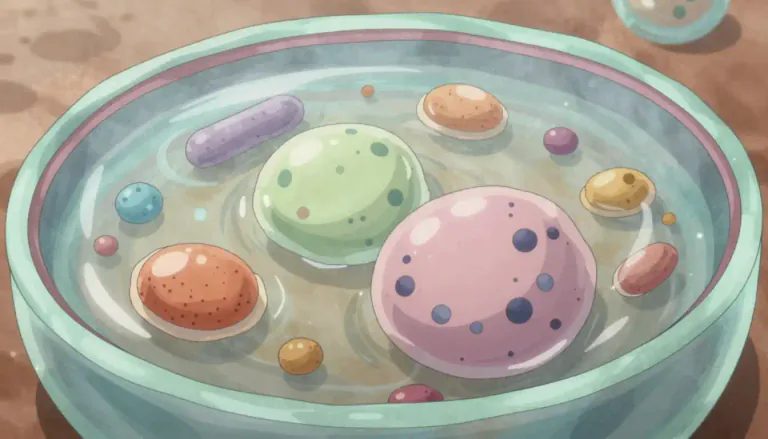
The liquid inside a living cell where all the cell's parts are found.
In a plant cell, chloroplasts are present in the cytoplasm.
Often appears as...
- cytoplasmic division
- cell's cytoplasm
Usage tips
Academic
noun
The liquid inside a living cell where all the cell's parts are found.
In a plant cell, chloroplasts are present in the cytoplasm.
Often appears as...
- cytoplasmic division
- cell's cytoplasm
Usage tips
Academic
Definition 1 of 1
 Pro Tip 1/3
Cellular Context
Used in biology to discuss the internal environment of cells where processes occur.
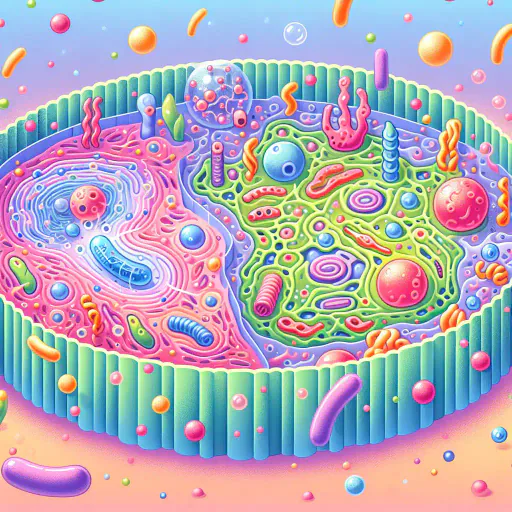
The cytoplasm contains the enzymes needed for metabolic reactions.
Pro Tip 2/3Not Just Fluid
Despite its description as liquid, cytoplasm is jelly-like and contains organelles and cytoskeleton.
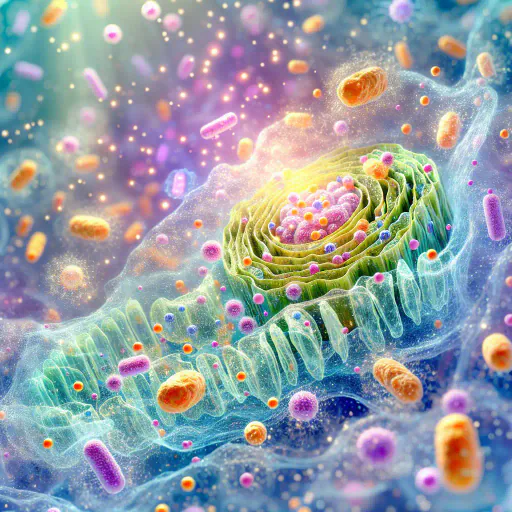
Besides water, the cytoplasm comprises various molecules and organelles.
Pro Tip 3/3Living Cells Only
'Cytoplasm' refers to the content within living cells, not applicable to non-living entities.

Scientists study the cytoplasm to understand cellular life.
Pro Tip 1/3Cellular Context
Used in biology to discuss the internal environment of cells where processes occur.
The cytoplasm contains the enzymes needed for metabolic reactions.
Pro Tip 2/3Not Just Fluid
Despite its description as liquid, cytoplasm is jelly-like and contains organelles and cytoskeleton.
Besides water, the cytoplasm comprises various molecules and organelles.
Pro Tip 3/3Living Cells Only
'Cytoplasm' refers to the content within living cells, not applicable to non-living entities.
Scientists study the cytoplasm to understand cellular life.
Pro Tip 1/3Cellular Context
Used in biology to discuss the internal environment of cells where processes occur.
The cytoplasm contains the enzymes needed for metabolic reactions.
Pro Tip 2/3Not Just Fluid
Despite its description as liquid, cytoplasm is jelly-like and contains organelles and cytoskeleton.
Besides water, the cytoplasm comprises various molecules and organelles.
Pro Tip 3/3Living Cells Only
'Cytoplasm' refers to the content within living cells, not applicable to non-living entities.
Scientists study the cytoplasm to understand cellular life.
Never forget "Cytoplasm"
Humans forget easily. That's why you should download WordUp: Smart reminders, word games, AI practice, and much more!




Video examples
Cell membranes are way...
yet strong enough to protect the delicate contents of the cell's watery cytoplasm, genetic material, organelles, and all the molecules it needs to survive. How does the membrane work, and where does that strength come from?
Video examples
Cell membranes are way...
yet strong enough to protect the delicate contents of the cell's watery cytoplasm, genetic material, organelles, and all the molecules it needs to survive. How does the membrane work, and where does that strength come from?
Example 1 of 1
Quote examples
John Gurdon
English Scientist
The importance of the egg's non-nuclear material - the cytoplasm - in early development is apparent in the consistent relation that is seen to exist between certain regions in the cytoplasm of a fertilized egg and certain kinds or directions of cell differentiation.

Quote examples
John Gurdon
English Scientist
Nuclear transplantation is a technique that has enormously facilitated the analysis of these interactions between nucleus and cytoplasm.
Quote examples
John Gurdon
English Scientist
The importance of the egg's non-nuclear material - the cytoplasm - in early development is apparent in the consistent relation that is seen to exist between certain regions in the cytoplasm of a fertilized egg and certain kinds or directions of cell differentiation.
Quote examples
John Gurdon
English Scientist
Nuclear transplantation is a technique that has enormously facilitated the analysis of these interactions between nucleus and cytoplasm.
Example 1 of 2

WordUp Chrome Extension
As you browse the web instantly look up words you don’t know.
Get Chrome Extension