Sati
noun
A historical Hindu practice where a widow self-immolates, or is forced to self-immolate, on her husband's funeral pyre.
The practice of Sati was outlawed in India in the 19th century.
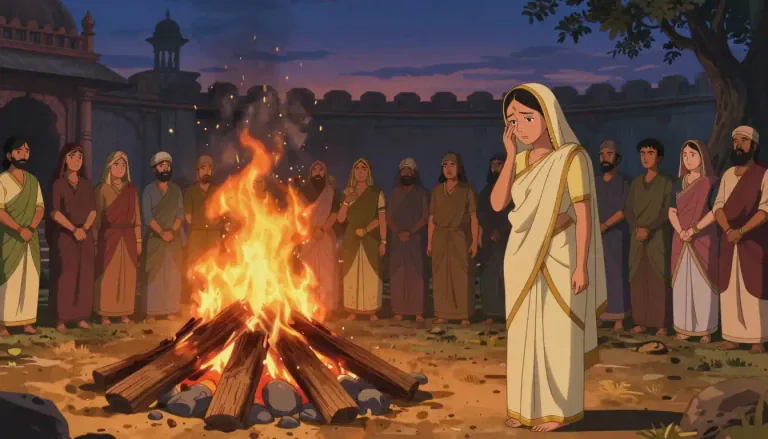
Often appears as...
- practice of sati
- sati was outlawed
Usage tips
Historical
noun
A historical Hindu practice where a widow self-immolates, or is forced to self-immolate, on her husband's funeral pyre.
The practice of Sati was outlawed in India in the 19th century.
Often appears as...
- practice of sati
- sati was outlawed
Usage tips
Historical
Definition 1 of 1
 Pro Tip 1/3
Historical Sensitivity
Remember, 'sati' refers to a banned practice. Use it with historical and cultural sensitivity.

When discussing customs like sati, it is important to respect the sensitivity of the subject.
Pro Tip 2/3Legal Context
'Sati' was made illegal due to its inhumane nature, helpful to mention when discussing its legality.

The abolition of sati in the 19th century was a significant legal reform for women's rights in India.
Pro Tip 3/3Cultural Understanding
Understanding 'sati' requires knowledge of historical Hindu customs and Indian culture.

To fully grasp the concept of sati, one must delve into historical Indian societal structures.
Pro Tip 1/3Historical Sensitivity
Remember, 'sati' refers to a banned practice. Use it with historical and cultural sensitivity.
When discussing customs like sati, it is important to respect the sensitivity of the subject.
Pro Tip 2/3Legal Context
'Sati' was made illegal due to its inhumane nature, helpful to mention when discussing its legality.
The abolition of sati in the 19th century was a significant legal reform for women's rights in India.
Pro Tip 3/3Cultural Understanding
Understanding 'sati' requires knowledge of historical Hindu customs and Indian culture.
To fully grasp the concept of sati, one must delve into historical Indian societal structures.
Pro Tip 1/3Historical Sensitivity
Remember, 'sati' refers to a banned practice. Use it with historical and cultural sensitivity.
When discussing customs like sati, it is important to respect the sensitivity of the subject.
Pro Tip 2/3Legal Context
'Sati' was made illegal due to its inhumane nature, helpful to mention when discussing its legality.
The abolition of sati in the 19th century was a significant legal reform for women's rights in India.
Pro Tip 3/3Cultural Understanding
Understanding 'sati' requires knowledge of historical Hindu customs and Indian culture.
To fully grasp the concept of sati, one must delve into historical Indian societal structures.
Never forget "Sati"
Humans forget easily. That's why you should download WordUp: Smart reminders, word games, AI practice, and much more!




Video examples
TED2015 in review PIPE...
touching touching we just had this this very powerful session we heard the calmest man in the world tell us to get angry which was beautiful and and sati Aarti he also has
Video examples
TED2015 in review PIPE...
touching touching we just had this this very powerful session we heard the calmest man in the world tell us to get angry which was beautiful and and sati Aarti he also has
Example 1 of 1

WordUp Chrome Extension
As you browse the web instantly look up words you don’t know.
Get Chrome Extension