Isomerism
noun
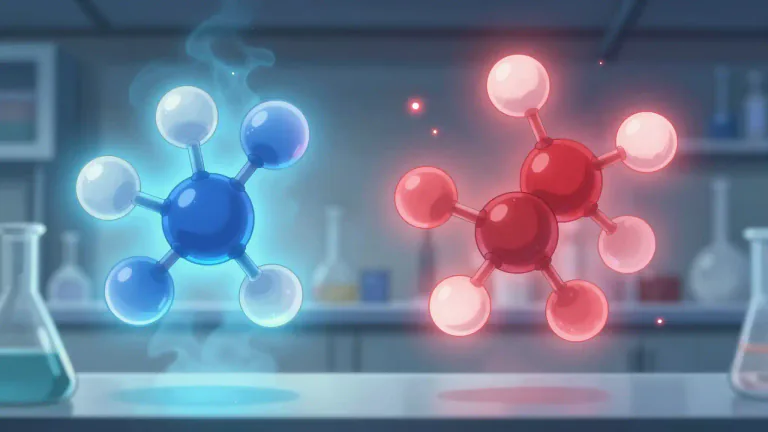
The condition of having a similar structure but different arrangement of atoms, typical in chemistry.
Isomerism gives rise to differences in the physical and chemical properties of compounds.
Often appears as...
- structural isomerism
- stereoisomerism
Usage tips
Academic
noun
The condition of having a similar structure but different arrangement of atoms, typical in chemistry.
Isomerism gives rise to differences in the physical and chemical properties of compounds.
Often appears as...
- structural isomerism
- stereoisomerism
Usage tips
Academic
Definition 1 of 1
 Pro Tip 1/3
Chemistry Context
Isomerism is primarily used in chemical contexts to discuss molecules with the same formula but different structures.
The study of isomerism can reveal why two substances with identical molecular formulas have distinct smells.
Pro Tip 2/3Different Properties
Even though isomers have the same atoms, their arrangement can give them quite different properties.

Due to isomerism, butane and isobutane have different boiling points.
Pro Tip 3/3Types of Isomerism
Remember that isomerism has types - structural isomerism involves different connections, stereoisomerism involves different 3D arrangements.
Structural isomerism is a simpler concept than stereoisomerism, which includes enantiomers.
Pro Tip 1/3Chemistry Context
Isomerism is primarily used in chemical contexts to discuss molecules with the same formula but different structures.
The study of isomerism can reveal why two substances with identical molecular formulas have distinct smells.
Pro Tip 2/3Different Properties
Even though isomers have the same atoms, their arrangement can give them quite different properties.
Due to isomerism, butane and isobutane have different boiling points.
Pro Tip 3/3Types of Isomerism
Remember that isomerism has types - structural isomerism involves different connections, stereoisomerism involves different 3D arrangements.
Structural isomerism is a simpler concept than stereoisomerism, which includes enantiomers.
Pro Tip 1/3Chemistry Context
Isomerism is primarily used in chemical contexts to discuss molecules with the same formula but different structures.
The study of isomerism can reveal why two substances with identical molecular formulas have distinct smells.
Pro Tip 2/3Different Properties
Even though isomers have the same atoms, their arrangement can give them quite different properties.
Due to isomerism, butane and isobutane have different boiling points.
Pro Tip 3/3Types of Isomerism
Remember that isomerism has types - structural isomerism involves different connections, stereoisomerism involves different 3D arrangements.
Structural isomerism is a simpler concept than stereoisomerism, which includes enantiomers.
Never forget "Isomerism"
Humans forget easily. That's why you should download WordUp: Smart reminders, word games, AI practice, and much more!





WordUp Chrome Extension
As you browse the web instantly look up words you don’t know.
Get Chrome Extension